
Cameras in Assisted Living Facilities in Ohio? What Families Need to Know Will Surprise You
When families ask me about using cameras in assisted living facilities in Ohio, it’s usually because something about their mom or dad’s care doesn’t feel right. Maybe there are unexplained bruises, sudden changes in mood, or a sense that staff seem rushed or unavailable. As a former registered nurse and now an Ohio assisted living abuse lawyer, I understand that instinct to protect the person you love.
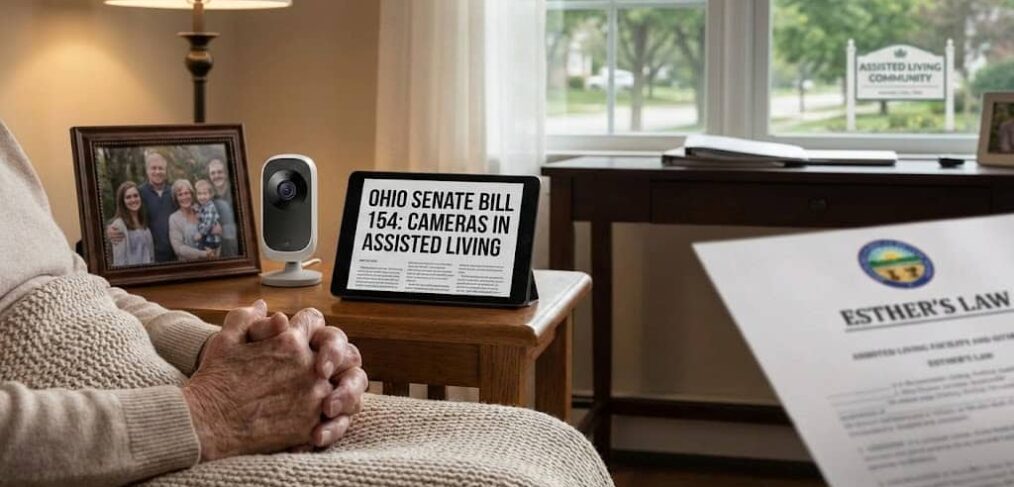
Right now, Ohio nursing home residents have the right to install electronic monitoring under Esther’s Law. However, families are often surprised to learn that the same rights do not apply in assisted living.
A new proposal, Senate Bill 154 (SB 154), would extend the protections of Esther’s Law into assisted living and residential care facilities. Below, I explain what this bill would change, why lawmakers say it’s urgently needed, and how families can safeguard a loved one even before any law takes effect.
Why is Ohio considering cameras in assisted living now?
Sen. Catherine Ingram’s introduction of SB 154 clearly explained the bill’s purpose: “The goal of this legislation is simple — to extend transparency, accountability, and peace of mind to every Ohioan in long-term care.”
She also noted that the “Current law leaves out nearly 60,000 Ohioans who live in residential care facilities, who rely on staff and deserve the same protections as those in nursing facilities.”
Families often assume assisted living has the same legal protections as nursing homes, but it does not. That gap is what SB 154 seeks to address.
Sen. Ingram added something that resonates with so many of the families I speak to: “Cameras cannot and will not replace caregivers, but they can strengthen trust and communication between residents, their families, and staff.”
Read more: What Families Should Ask About Nursing Home Technology in Ohio
What would SB 154 change for assisted living residents?
The bill would formally amend Ohio’s long-term care laws to allow electronic monitoring in assisted living and residential care settings and would:
- Allow residents (or their representatives) to install cameras in assisted living
- Limit installation costs to $50
- Allow facilities to charge $2 per month for internet access
- Establish rules for notice, consent, and who may view footage
- Align assisted living protections more closely with Esther’s Law
These fee caps match the structure of the existing nursing home law, aiming to make monitoring affordable and accessible.
Why are some assisted living organizations pushing back?
As McKnight’s Senior Living reports, some groups believe the bill goes further than the original Esther’s Law, including LeadingAge Ohio’s claim that “SB 154 goes beyond Esther’s Law in important ways that muddy legal decisionmaking and pass the cost of internet service on to nursing homes.”
Why families are asking for monitoring in the first place
The original Esther’s Law was inspired by the experience of Steve Piskor, who placed a hidden camera in his mother’s nursing home room after noticing concerning injuries. Sadly and alarmingly, he discovered that his mother was being seriously abused by nursing home aides who were supposed to be helping her.
While not every case involves abuse, far too many families in Ohio worry about unexplained injuries, repeated falls, or behavioral changes. The Columbus Dispatch recently highlighted the scope of the problem: “Approximately 1 in 10 seniors are victims of elder abuse.”
This statistic reflects what many families feel in their gut: something is happening behind closed doors that they cannot see.
Are cameras allowed in assisted living in Ohio right now?
Not yet.
Ohio’s existing camera law applies only to nursing homes, not assisted living communities. Assisted living is regulated differently and historically has not had the same resident-rights protections.
Until legislation changes, families must rely on other tools to ensure safety. I offer an in-depth guide on how to report elder abuse in Ohio.
If cameras become legal, will assisted living communities still need to consent?
Yes. Even under Esther’s Law, facilities must be notified before any monitoring device is installed.
If SB 154 passes, families should expect requirements for:
- Resident or guardian consent
- Notice to roommates
- Posted signage
- Privacy protections for bathrooms and dressing areas
- Reasonable limits on audio recording
These guardrails exist to protect both residents and their caregivers.
Do cameras actually help prevent abuse or neglect?
Electronic monitoring is not a substitute for staffing, training, or proper supervision. But it can:
- Clarify how injuries occur
- Provide documentation when care concerns arise
- Encourage consistent caregiving practices
- Protect residents who cannot communicate pain or fear
- Bring peace of mind to families who worry daily
Many families tell me they are not trying to “catch” staff doing something wrong. They simply want to make sure their mom or dad is cared for with respect and dignity.
What can families do now, before any new law takes effect?
Even without cameras, you can take meaningful steps to protect your loved one:
- Visit at varied times, especially evenings and weekends.
- Document concerns with dates, photos, and notes.
- Ask questions about care plans, fall-prevention strategies, and medication changes.
- Review your loved one’s Ohio resident rights
- Trust your instincts — they’re usually right.
If something feels wrong, it is absolutely appropriate to speak with an attorney who focuses on elder abuse and neglect.
Read more: Who is “Assisting” at Assisted Living Facilities in Ohio and… Is It Enough?
When should you contact an Ohio assisted living abuse lawyer?
Reach out if your loved one is showing:
- Unexplained injuries
- Sudden mood changes or withdrawal
- Weight loss or dehydration
- Poor hygiene
- Falls or wandering
- Long waits for assistance
- Possible financial exploitation
Assisted living communities have a legal duty to keep residents safe. When they fail to meet that obligation, families deserve answers.
If you’re worried about your loved one, I’m here to help.
For more than 30 years, I’ve combined my background as a registered nurse and attorney to help families protect their loved ones in nursing homes and assisted living. I meet with families from across the state — in Cleveland, Cincinnati, Dayton, and nearby communities — who are trying to make sense of changes they’re seeing in a loved one’s assisted living care. If you’re worried, please reach out. I will listen, review what’s happening, and help you plan the next steps that protect your loved one.
I would be honored to help your loved one stay safe.