
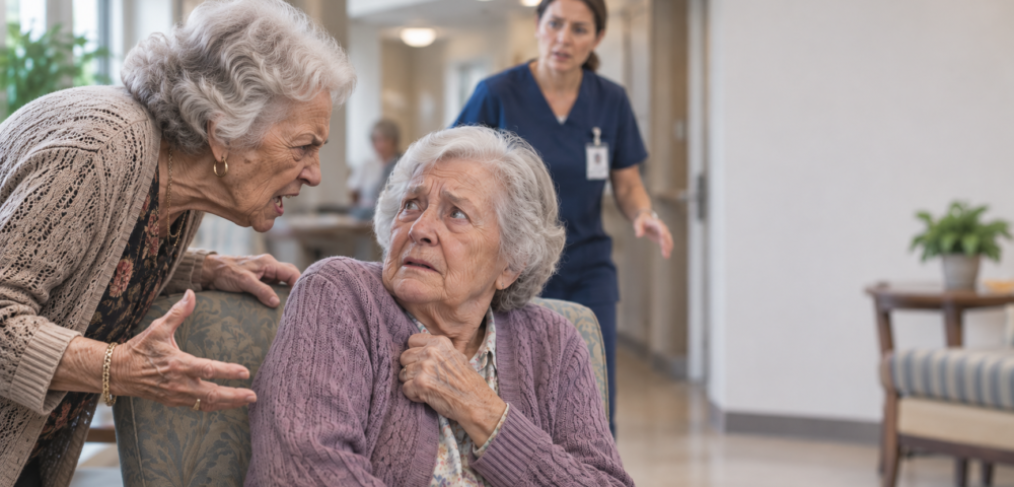
Resident-on-Resident Abuse in Ohio Nursing Homes: What Families Need to Know
When we think about nursing home abuse, we often picture a staff member hurting or mistreating a resident. But residents can also be harmed by roommates or other people living in the facility.
Resident-on-resident abuse can take many forms, from threats and intimidation to physical or sexual harm. Ohio nursing homes are responsible for recognizing risks and taking reasonable steps to protect the people in their care.
As a former registered nurse, I know that aggressive behavior in a nursing home rarely exists in a vacuum. Changes in cognition, pain, medication, illness, environment, or unmet care needs can all affect how a resident behaves. That makes it especially important for nursing homes to recognize changing needs in the resident before someone gets hurt.
This issue is receiving renewed attention. A 2026 KFF Health News investigation into resident-on-resident abuse in nursing homes identified more than 700 instances since January 2024 in which federal inspectors found nursing homes responsible for failing to protect residents from physical, sexual, or verbal abuse by other residents. During the first three months of 2026, resident-to-resident attacks were the most frequently cited type of abuse, neglect, or exploitation among the serious federal citations KFF reviewed.
These numbers represent federal inspection citations, not a count of every incident that occurred. In reality, the numbers are much higher. But they are an important reminder that harm between residents can be a serious nursing home safety issue.
What is resident-on-resident abuse in a nursing home?
Resident-on-resident abuse occurs when one nursing home resident physically, sexually, verbally, or emotionally harms another resident. Sometimes the problem is elder abuse by roommates, but it can also involve a neighbor in the same hallway or another resident encountered in a dining room, activity area, or other shared space.
Examples may include:
- Hitting, kicking, pushing, biting, scratching, or throwing objects
- Threatening or intimidating another resident
- Repeated bullying or verbal aggression
- Unwanted sexual touching or sexual behavior
- Entering another resident’s room or personal space in a threatening or intrusive way
- Other behavior that causes fear, pain, injury, or significant emotional distress
The Centers for Medicare & Medicaid Services guidance on resident-to-resident altercations requires nursing home surveyors to review these incidents as potential situations of abuse. At the same time, not every disagreement between residents is abuse.
An occasional argument at the dinner table is very different from repeated threats, physical harm, sexual misconduct, or behavior that causes another resident to live in fear.
That distinction matters. Nursing homes are communities, and disagreements can happen. The concern is when behavior places a vulnerable resident at risk and the facility fails to recognize or address it.
How common is resident-on-resident abuse in nursing homes?
Research suggests that resident-on-resident mistreatment may be more common than many families realize.
An Annals of Internal Medicine study on resident-to-resident mistreatment examined 2,011 residents in 10 New York nursing homes. Researchers found that 20.2% experienced at least one incident of resident-to-resident mistreatment during a one-month period.
Verbal mistreatment was the most common, followed by conduct such as invasion of privacy or menacing gestures, physical mistreatment, and sexual mistreatment. Researchers also found associations with factors including cognitive impairment, residence on a dementia unit, and higher nurse aide caseloads.
The study was conducted in New York, so it should not be interpreted as an estimate of what happens in every Ohio nursing home. But together with more recent federal inspection findings, it shows why families and facilities need to take this issue seriously.
How does dementia affect resident-on-resident abuse?
Dementia can increase the risk of conflict because it may affect judgment, communication, impulse control, and the way a resident interprets another person’s actions. But dementia does not excuse a facility from responding to known risks.
A resident with dementia may become agitated, enter another person’s room, misunderstand another resident’s behavior, or react aggressively when frightened or confused.
Recent reporting on nursing home incidents involving residents with dementia found that serious altercations were sometimes preceded by warning signs that facilities had opportunities to address.
This is one reason I do not believe these situations should simply be reduced to one resident being the “bad guy.”
When I look at these situations, I want to know what was happening before someone got hurt. Had staff noticed a change in behavior? Were there previous conflicts? Had the resident become more agitated, confused, or aggressive? What did the care plan say, and what had the facility already tried?
In many cases, both residents are vulnerable people who depend on the nursing home to recognize changing needs and provide appropriate care and supervision.
What risks should a nursing home address before an incident?
Nursing homes should act when they know, or reasonably should know, that a resident’s behavior may pose a risk to someone else.
Warning signs may include:
- A history of aggressive or threatening behavior
- Repeated negative interactions with another resident
- Verbal outbursts or escalating agitation
- Entering other residents’ rooms
- Taking or disrupting another resident’s belongings
- Previous physical altercations
- Complaints from a roommate or family member
- Behavioral changes that are not being effectively managed
CMS guidance emphasizes identifying medical, environmental, and behavioral factors that may contribute to resident conflicts and developing appropriate interventions through the care-planning process.
For families, an important question after an incident is: Was this truly unexpected, or were there signs that something was going wrong?
One previous disagreement does not mean another incident was inevitable. But repeated aggression, escalating behavior, or ineffective interventions should not simply be ignored.
When can a nursing home fail to protect a resident from another resident?
A nursing home may have failed to protect a resident when staff knew, or reasonably should have known, that another resident presented a risk and did not take appropriate steps to address it.
The question is often not simply who caused the injury. It is also what the facility knew beforehand and how it responded.
Depending on the circumstances, important questions may include:
- Did staff know about previous aggressive or threatening behavior?
- Had there been earlier conflicts involving the same residents?
- Did Mom or Dad tell staff that they were afraid of another resident?
- Was the resident properly assessed after behavior began to change?
- Was the care plan updated?
- Were the interventions actually working?
- Did the facility provide appropriate supervision?
- Was the roommate placement appropriate?
- Were staff trained to recognize and respond to dementia-related behaviors?
- After an earlier incident, did the facility take meaningful steps to prevent another one?
In some cases, it is important to have the police or local law enforcement notified as an assault is a crime.
Federal guidance emphasizes that facilities should identify residents at risk of altercations, understand factors that may trigger behavior, develop appropriate interventions, and evaluate whether those interventions are effective.
Not every resident-on-resident injury means the nursing home did something wrong. But serious harm after repeated warning signs or ineffective interventions deserves a closer look.
Families dealing with a serious physical attack can also learn more about nursing home assault cases.
What should a nursing home do after one resident harms another?
The nursing home should first protect the resident who was harmed, address any medical needs, investigate what happened, and determine what must change to prevent another incident.
Depending on the circumstances, that may include:
- Separating residents
- Reassessing one or both residents
- Updating care plans
- Changing supervision
- Addressing environmental or behavioral triggers
- Reconsidering roommate or room assignments
- Reviewing whether earlier interventions were effective
The nursing home’s responsibility does not necessarily end when the immediate incident is over. Ohio nursing home operators are also required to immediately report real, alleged, or suspected abuse, neglect, or exploitation through the reporting system prescribed by the Ohio Department of Health under Ohio Administrative Code Rule 3701-17-06.
Federal requirements likewise address reporting and investigation of qualifying resident-to-resident altercations.
Families do not have to assume that an incident was handled appropriately simply because the facility says it investigated.
What are the warning signs of resident-on-resident abuse?
Unexplained injuries, fear of another resident, sudden behavioral changes, and repeated complaints about a roommate or neighbor can all be signs that something is wrong.
Some residents can tell their families exactly what happened. Others cannot, especially when dementia, memory loss, speech difficulties, or other conditions affect communication.
Pay attention if Mom or Dad:
- Has unexplained bruises, cuts, scratches, or other injuries
- Suddenly seems afraid of another resident
- Does not want to return to a room or common area
- Has changes in eating or sleeping routines
- Repeatedly complains about a roommate
- Becomes unusually anxious, withdrawn, tearful, or fearful
- Has belongings repeatedly taken or disturbed
- Experiences repeated injuries without a clear explanation
Physical injuries are not the only warning signs. Fear, withdrawal, emotional distress, and changes in behavior may also be important.
Families who are seeing unexplained health changes or injuries may also want to review other signs of nursing home neglect.
What should I do if Mom or Dad is afraid of another resident?
Take the concern seriously and ask the nursing home what it knows, whether there have been previous incidents, and what it is doing to keep your parent safe. Document what your loved one tells you and any injuries or behavioral changes you observe.
It can help to write down:
- What your loved one told you
- Injuries or behavioral changes you observed
- Dates and times of previous incidents
- Names of staff members you spoke with
- What the facility said it would do
- Whether the problem continued after you raised concerns
If there is an immediate danger or serious injury, seek appropriate medical or emergency assistance.
Families can also report suspected abuse or neglect to the Ohio Department of Health. Our guide to how to report nursing home abuse in Ohio explains the reporting process and other resources available to families.
Frequently asked questions about resident-on-resident abuse
What is resident-on-resident abuse in a nursing home?
Resident-on-resident abuse is physical, sexual, verbal, or emotional harm caused by one nursing home resident to another. Not every disagreement is abuse, so the nature of the behavior, the circumstances, and the effect on the resident all matter.
What if the resident who caused the harm has dementia?
Dementia may contribute to aggressive or unpredictable behavior, but it does not eliminate the nursing home’s responsibility to respond to known risks. The facility should assess the resident, identify possible triggers, develop appropriate interventions, and take reasonable steps to protect others.
What should a nursing home do after one resident harms another?
The nursing home should protect the resident who was harmed, address medical needs, investigate what happened, and determine whether assessments, care plans, supervision, or other interventions need to change. Depending on the circumstances, reporting requirements may also apply.
Does an Ohio nursing home have to report resident-on-resident abuse?
Ohio requires nursing home operators to immediately report real, alleged, or suspected abuse, neglect, or exploitation through the state’s prescribed reporting system. Federal nursing home rules also include reporting and investigation requirements for qualifying incidents.
What if the nursing home says there was no way to prevent the incident?
Some incidents truly may occur without warning. But families should still ask whether there were earlier signs of aggression, previous conflicts, problems with a roommate assignment, behavioral changes, or other reasons the facility should have recognized a risk.
Helping Ohio families understand what happened
Finding out that Mom or Dad was hurt by another nursing home resident can be especially confusing. Families may feel sympathy for another resident who is also elderly or living with dementia while still wondering why the nursing home did not prevent the injury.
Those questions are reasonable.
My background as both a former registered nurse and an attorney helps me look beyond the incident itself. I review medical records, assessments, care plans, behavioral history, staffing, and supervision to understand what the facility knew, what it did, and whether warning signs were missed.
If your loved one has been seriously injured by another resident in an Ohio nursing home, the Nancy C. Iler Law Firm can help you understand what happened and whether the facility failed to provide appropriate protection.
I represent families throughout Ohio, including Cleveland, Cincinnati, and Dayton. Contact my office for a free consultation about your concerns.
About the Author
Nancy C. Iler, R.N., J.D. is an Ohio nursing home abuse and neglect attorney and former practicing nurse with more than 30 years of legal experience. She represents residents and families in cases involving nursing homes, assisted living facilities, and other long-term care settings throughout Ohio.